Straight answers from a stone specialist
Understand the surface.Make the right decision.
The knowledge library
Questions worth asking before touching the stone.
If your surface is unusual or already damaged, send a photo before applying another product.
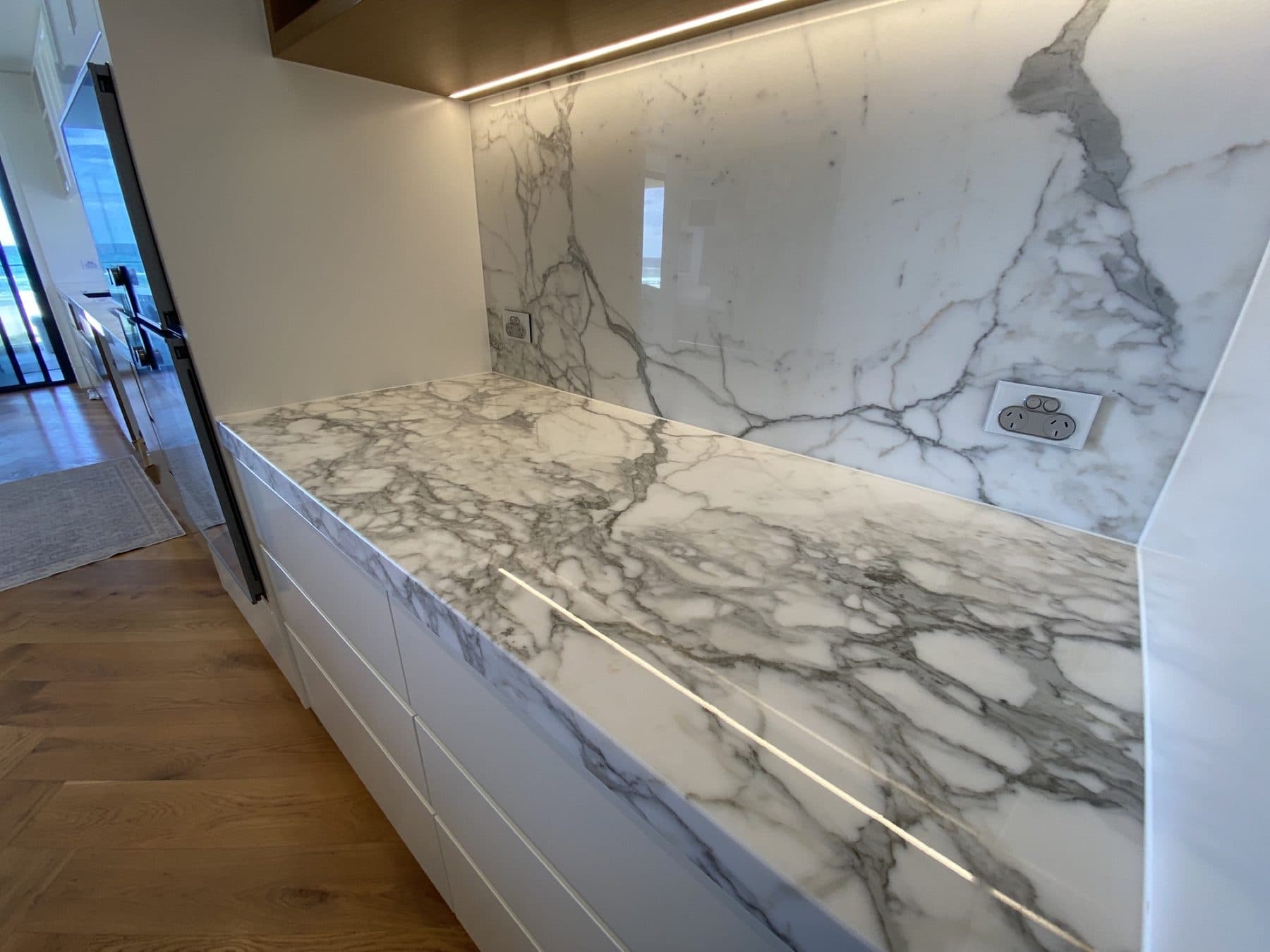
Yes. Calcium-based stones are naturally porous, scratch relatively easily and react to acids. A quality penetrating sealer improves stain resistance, but it cannot prevent scratches or acid etching because it sits below the surface.
Topical sealers form a film on the stone and may alter its appearance, wear under traffic or trap moisture. Impregnating sealers bond inside the pore structure, helping repel water and oil while preserving the natural texture and allowing vapour movement.
The right choice depends on the stone, its previous treatment and its location. Solvent-carried products can achieve excellent depth on dense or resin-treated materials; high-quality water-based systems can suit other conditions. We specify the product after assessing the surface.
Pre-sealing protects absorbent tile faces and edges before installation. It can reduce grout migration, picture framing and moisture-related marking. A simple absorption test helps determine whether the stone needs it.
Picture framing is the dark or discoloured border that can appear around installed tiles, usually from moisture, grout or adhesive entering the stone through its edges. Prevention during installation is much more reliable than attempting to reverse it later.
Yes. A sealer buys cleaning time; it does not make stone invincible. Contaminants can still mark the surface, but a correctly sealed material usually keeps them closer to the surface so removal is more manageable.
Etching is a physical change in the surface caused when acid reacts with calcium carbonate. It appears as a dull or pale mark and must be mechanically refinished or prevented with a suitable topical protection film such as TuffSkin.
Still unsure?